

 Language
 English
 Français
 Español
 Deutsch
Ergonomic Kids Gaming Chairs: Protecting Your Child’s Posture While They Play
2026-05-15
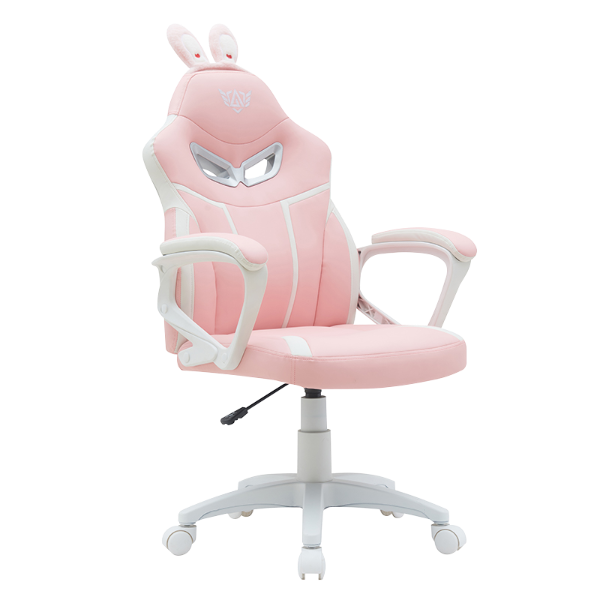
The rapid growth of online learning and recreational gaming has led to a new focus on children’s seating. While adult gaming chairs have been widely discussed for years, the unique anatomical and behavioral needs of children have recently pushed the market toward specialized solutions. Among these, the ergonomic kids gaming chair has emerged as an essential piece of furniture for modern households. Parents are no longer just looking for colorful seats; they seek equipment that actively supports spinal development, encourages dynamic sitting, and reduces long-term postural risks.
Why Standard Chairs Fail Children
Most household chairs are designed for adult anthropometrics. When a child sits in a standard office or dining chair, several problems arise:
- Seat depth is too long, causing the back to slump backward.
- Armrests are too wide or too high, causing shoulder elevation.
- Lumbar support, if present, aligns with the lower back of an adult, not a child.
- Fixed height prevents feet from resting flat on the floor, increasing pressure on the thighs and lower spine.
Over time, these mismatches contribute to forward head posture, rounded shoulders, and even asymmetrical spinal loading. Pediatric physiotherapists have noted an uptick in complaints of neck fatigue and lower back discomfort among children who spend more than two hours daily at a desk or console. A properly designed kids gaming chair addresses these issues by scaling every dimension to the 5th to 95th percentile of child body sizes, typically covering ages 6 to 14.
Core Ergonomic Features in a Kids Gaming Chair
A genuine ergonomic kids gaming chair is not merely a smaller replica of an adult chair. It incorporates specific design elements that accommodate growing bodies and dynamic gaming postures. The table below outlines the key features and their physiological benefits.
| Feature | What It Does | Postural Benefit |
|---|---|---|
| Adjustable seat height (12–20 cm range) | Allows feet to rest flat on floor | Reduces hamstring tension and lumbar kyphosis |
| Shorter seat depth (34–38 cm) | Prevents popliteal pressure | Maintains natural pelvic tilt |
| Multi-directional armrests (height + width) | Supports forearms without elevating shoulders | Decreases trapezius load |
| Lumbar support with height adjustment | Matches curve of child’s lower spine | Preserves lordotic curve |
| 90°–110° backrest recline | Enables active sitting during different tasks | Alternates loading on intervertebral discs |
| Breathable mesh or high-density foam | Reduces sweating and pressure points | Encourages longer periods of good posture |
These features must work in concert. For example, a child cannot use the lumbar support correctly if the seat depth forces them to slide forward. Therefore, reputable manufacturers—often a specialized kids gaming chair factory—calibrate these parameters together rather than adding adjustments in isolation.
Active Sitting and Micro-Movements
One of the misunderstood aspects of children’s ergonomics is the role of movement. Prolonged static sitting, even in a posture, leads to muscle fatigue and reduced blood flow. Children naturally fidget, and rather than suppressing this behavior, an ergonomic kids gaming chair can leverage it through dynamic sitting surfaces.
Some advanced models incorporate a slight convex curve on the seat pan or a subtle rocking mechanism. These designs encourage weight shifting and pelvic movement, which:
- Activate core stabilizers intermittently.
- Improve proprioceptive feedback.
- Reduce the risk of postural fixation (staying in one harmful position for hours).
Dynamic sitting is particularly valuable during gaming sessions, where children often lean forward during intense moments and slump back during downtime. A well-designed chair allows these shifts without forcing the child into postures. The seat edge should be waterfall-shaped (rounded downward) to prevent cutting off circulation behind the knees, regardless of how much the child moves.
Growth Adaptability: From Age 6 to 14
A single kids gaming chair should ideally serve a child for five to eight years. This requires adjustability ranges that cover rapid growth spurts. A reliable kids gaming chair factory tests its adjustment mechanisms for at least 10,000 cycles to ensure long-term durability. The critical growth parameters are:
- Seat height: From 32 cm from floor to seat pan (for a 6-year-old) up to 52 cm (for a 14-year-old).
- Backrest height: Able to extend from lower thoracic to upper cervical support.
- Armrest width: From 38 cm inner distance (narrow) to 48 cm (broad).
If a chair lacks tool-free height adjustment for both seat and backrest, it will likely become obsolete within two years. Parents should prioritize gas lift mechanisms rated for at least 50 kg (for safety margin) and with smooth, incremental height changes. Additionally, the weight capacity should be clearly stated—most ergonomic kids gaming chairs support 40–80 kg, covering average children and pre-teens.
Materials and Safety Standards
Children interact with their chairs more abrasively than adults. They jump into seats, drag them across floors, and occasionally tip backward. Therefore, materials and construction must meet higher safety thresholds. Look for the following certifications and material choices:
| Component | Recommended Specification | Safety Purpose |
|---|---|---|
| Base | Nylon or steel-reinforced, 5-point base | Prevents lateral tip-over |
| Gas lift | Class 3 or 4, with protective shroud | Avoids sudden collapse; shroud prevents pinching |
| Foam | Cold-cured, high-resilience, CFR 1633 compliant | Fire retardant without toxic fumes |
| Cover fabric | Polyester blend with double stitching | Resists tearing; no small detachable parts |
| Casters | Soft PU, 50 mm diameter, braking option | Protects flooring and adds stability when locked |
One often overlooked risk is the presence of phthalates and heavy metals in cheap plastic components. A responsible kids gaming chair factory will provide test reports for EN 1335 (office furniture standard adapted for children) or similar regional norms. Parents should specifically request documentation on lead, cadmium, and phthalate content—these are not just environmental issues but direct neurological and endocrine concerns for growing bodies.
Setting Up the Chair Correctly
Even the advanced ergonomic kids gaming chair fails if not properly adjusted. The setup protocol should be followed before every long gaming session, or at least weekly as the child grows.
Step-by-Step Adjustment Guide
Feet flat: Adjust seat height so the child’s entire sole rests on the floor. Knees should be at approximately 90°, with a 2–3 cm gap behind the knee.
Seat depth: With the child’s back against the backrest, measure 2–3 finger widths between the front edge of the seat and the back of their knee.
Lumbar support: Move the support up or down until it sits just below the waistband of the child’s pants (around L3–L4 vertebrae).
Backrest angle: For keyboard or controller gaming, set a 95°–100° angle. For watching content, a 105°–110° angle reduces neck strain.
Armrests: Elbows should rest at 90° with shoulders relaxed. The armrest top should be level with the table/desk surface plus 1–2 cm.
Parents should re-check these adjustments after every school break or three months of growth. A good practice is to take a side-profile photo of the child sitting and compare it to an ergonomic reference chart.
Long-Term Postural Benefits and Habit Formation
Beyond the immediate comfort, an ergonomic kids gaming chair serves as a behavioral anchor. Children who sit in a supportive chair develop better proprioception—they learn what a neutral spine feels like. Over months and years, this reduces the likelihood of adopting poor postures when sitting on sofas, floors, or other non-ergonomic surfaces.
Several longitudinal observational studies (not industry-funded) have shown that children using properly sized, adjustable seating from ages 7 to 12 report significantly lower rates of recurring back and neck pain in their teenage years compared to peers using fixed or adult-sized chairs. While these studies do not name specific products, they consistently highlight the importance of adjustability range and parental involvement in setup—two factors directly under the control of the buyer.
Additionally, a kids gaming chair that includes a tilt-lock mechanism can be used for focused homework or reading. This crossover utility means the chair is not a single-purpose gaming accessory but a general learning aid. Many parents find that children spontaneously adopt better study postures when the chair feels “cool” and responsive, turning ergonomics into a voluntary habit rather than a forced rule.
How to Choose a Reliable Kids Gaming Chair Factory
For retailers or large buyers, vetting a kids gaming chair factory involves more than sampling one unit. Given that children’s products face stricter liability standards, due diligence should cover:
- ISO 4211 testing for surface resistance to spills and sweat.
- EN 1728 clause 6.5 for durability of seat and backrest under dynamic loads (simulating a child fidgeting).
- Absence of BPA, phthalates, and PFAS in upholstery and foams.
- Clear labeling of age/weight ranges and adjustment instructions.
Factories that specialize in children’s seating often offer modular designs where the same base frame can accept different seat depths and backrest heights. This allows cost-effective production of multiple size variants. It also simplifies replacement part logistics, which is crucial for schools or gaming cafes that maintain fleets of chairs.
When evaluating samples, pay special attention to the ease of adjustment levers—children aged 8–12 should be able to modify seat height and backrest angle without pinching their fingers. Pneumatic levers with large, rubberized paddles are to small metal tabs. Also, test the caster locking mechanism: if the chair will be used on a soft carpet, locking casters are less critical, but on hard floors, at least two locking casters are essential to prevent unwanted rolling during intense gameplay.
Conclusion
Protecting a child’s posture during gaming is not about restricting playtime or forcing rigid poses. It is about providing a tool that adapts to the child—not the other way around. An ergonomic kids gaming chair, when properly selected from a reliable kids gaming chair factory, offers a foundation for spinal health that extends into adolescence and adulthood. By prioritizing adjustability, safety certifications, and active sitting design, parents can turn every gaming session into an opportunity for healthy movement and postural awareness. The chair is not merely a seat; it is a silent coach for a lifetime of better posture.



-
EMAIL
jacky@guyoufurniture.com
-
mobile
+86-15705723262
-
address
Baishuiwan Industry Zone, Tianhuangping Town, Anji County, Huzhou City, Zhejiang Province, China
CONTACT FORM
Copyright 2024 Anji Guyou Furniture Co., Ltd. Rights Reserved. Wholesale Furniture Chairs Suppliers
