

 Language
 English
 Français
 Español
 Deutsch
Durable Gaming Chair for Teens: Essential Checks Before Buying in 2026
2026-09-24
Why Durability Matters More for Teens Than for Adult Users
A durable gaming chair for teens is not simply a smaller copy of an adult chair with a racing stripe. Teenage bodies change quickly, daily usage is intense, and the chair must survive everything from homework marathons to late-night gaming sessions. In practice, this means the chair has to keep its structure, adjustments, and comfort for several years while adapting to a body that is still growing.
Most buyers focus on price, color, and brand name. Few consider what actually causes a gaming chair to fail. The gas lift loses pressure, the casters crack, the base spokes snap, or the foam padding flattens until the user can feel the hard seat pan through the fabric. On low-cost models these failures often appear within the first 18 months, exactly the period when a teenager is spending more time at a desk.
According to recent survey data, teenagers between 13 and 17 spend roughly 1.5 to 2.5 hours per day with video games, and many use the same chair for homework. That combination means a chair gets several use cycles per day, not one. A frame designed for light occasional use will not tolerate that rhythm.
Durability is not about how heavy a chair feels on day one. It is about whether the chair still works properly on day 800.
Early warning signs that a chair is not durable enough include:
- The seat height slowly drops while the user is seated.
- Casters stop rolling smoothly or leave scratches on the floor.
- Armrest padding splits at the seams.
- The backrest tilts backward even when the lock is engaged.
For a teen user the stakes are higher than for an adult. A chair that drops suddenly while the user leans back, or a base that develops a dangerous wobble, can cause a serious fall. Durability is therefore both a comfort feature and a safety feature.
What "Durable" Really Means: Component by Component
A gaming chair is a system of components that work together. Durability improves only when every part is specified correctly. The table below lists the parts that fail first on low-cost chairs and the specification that prevents early failure.
| Component | Common point of failure | Durable specification |
|---|---|---|
| Gas lift | Loses pressure, seat drops | Class 3 or higher, certified |
| Five-star base | Cracks near the caster holes | Reinforced nylon or steel |
| Casters | Break or stop rolling | PU wheels with smooth bearings |
| Frame and mechanism | Backrest becomes loose | Steel frame, tested tilt lock |
| Foam padding | Flattens within months | High-density or memory foam |
| Upholstery | Tears or peels at seams | Double-stitched PU or mesh |
| Armrests | Wobble or crack | 2D/3D/4D with steel bracket |
When you compare models, ask for specifics: what type of gas lift, how many kilograms the base is rated for, and whether the mechanism has passed durability testing. If the spec sheet only says "high-quality materials," dig deeper.
Testing standards make a difference. A chair that has been tested for thousands of tilt cycles will behave differently from one that has never been mechanically tested. Look for references to recognized seating standards rather than vague marketing phrases.
Adjustability is part of durability too. A chair with 4D armrests, seat depth adjustment, and a movable lumbar support can adapt as the teen grows, so you do not have to replace the whole chair when the user gains a few centimeters. In this sense, more adjustment range means a longer product life cycle.
Match the Chair to a Teen's Body and Growth
Between the ages of 12 and 17, a teenager's height can increase significantly, and the chair must adapt to that change. The three most important adjustments are seat height, armrest height, and lumbar support position.
- Seat height: the seated teen should place both feet flat on the floor with knees bent to around 90 degrees. A seat height range starting near 44 cm fits most teens.
- Armrests: at least 2D adjustment is needed so the armrest height follows the elbow while the shoulder stays relaxed.
- Lumbar support: an adjustable lumbar cushion that moves up and down supports the lower back as the spine lengthens.
- Footrest: for shorter teens, a stable footrest prevents the legs from dangling during long sessions.
To measure correctly, ask the teen to sit with their back against the backrest and their feet on the floor. Measure the distance from the floor to the back of the knee, then check the lowest seat height of the chair. This single measurement prevents most sizing mistakes.
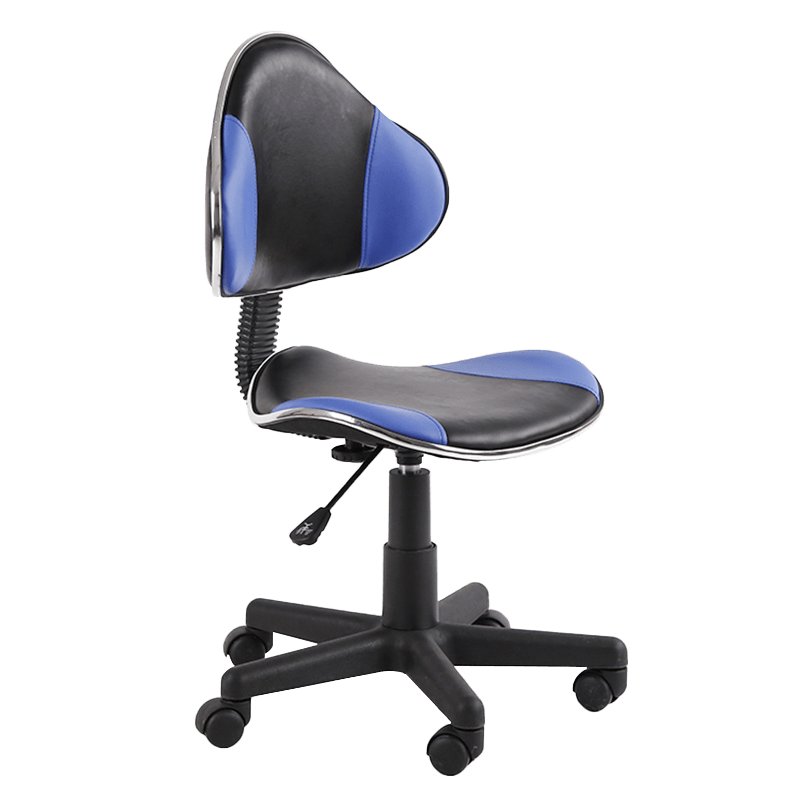
Junior gaming chairs with proportionally scaled seats are a practical option for younger teens. They avoid the common problem of an adult-size seat pressing against the back of the knees, and they often include adjustable lumbar support and a footrest. If your child is at the edge of two size ranges, choose the model with the wider adjustment range so the chair can grow with them. Junior gaming chairs with adjustable lumbar support and a footrest are a good starting point.
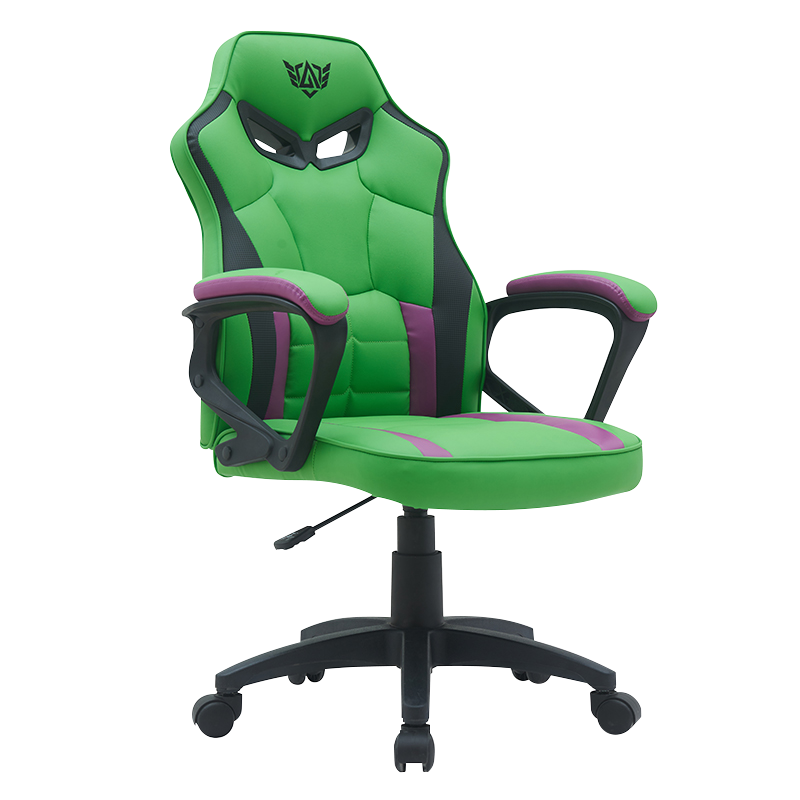 Mid-Back Swivel Gaming Chair with Padded Armrests and Height AdjustmentThis scaled junior gaming chair supports growing teens with adjustable height and a mid-height backrest, while padded armrests reduce arm and shoulder strain during long sessions.View Product →
Remember that adjustments must lock firmly. A handle that slips silently is a durability problem in disguise, because the user will stop adjusting the chair and start sitting in poor posture.
Frame, Base, and Mechanism: The Skeleton of a Long-Lasting Chair
The frame carries the entire load. On a durable gaming chair, the backrest frame should be steel and the seat plate should be solid enough to avoid flexing under quick movements. The five-star base should be reinforced nylon for lighter teens or steel for heavier users. If the base is painted metal, inspect the welds and the thickness of the spokes.
The gas lift is the most safety-critical component. A class 3 lift is the practical minimum for home use, and class 4 is better for teenagers because it handles heavier loads and repeated adjustments. Do not rely on the barrel diameter alone; ask for the rated capacity in kilograms.
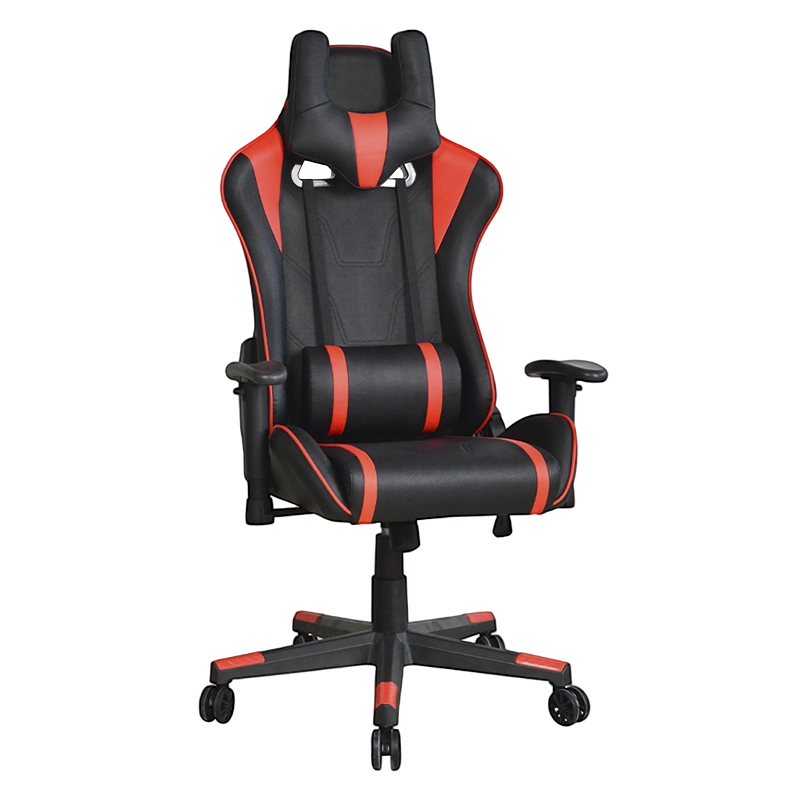
The tilt mechanism is where durability meets daily feel. A simple tilt-lock system locks the backrest at a chosen angle, while a synchro-tilt mechanism moves the seat and backrest together, reducing pressure on the legs and using sturdier springs. The lock must engage without delay and must hold the backrest firmly when the teen leans back. Models such as gaming chairs with a recline lock and memory foam cushioning combine these two features in one package.
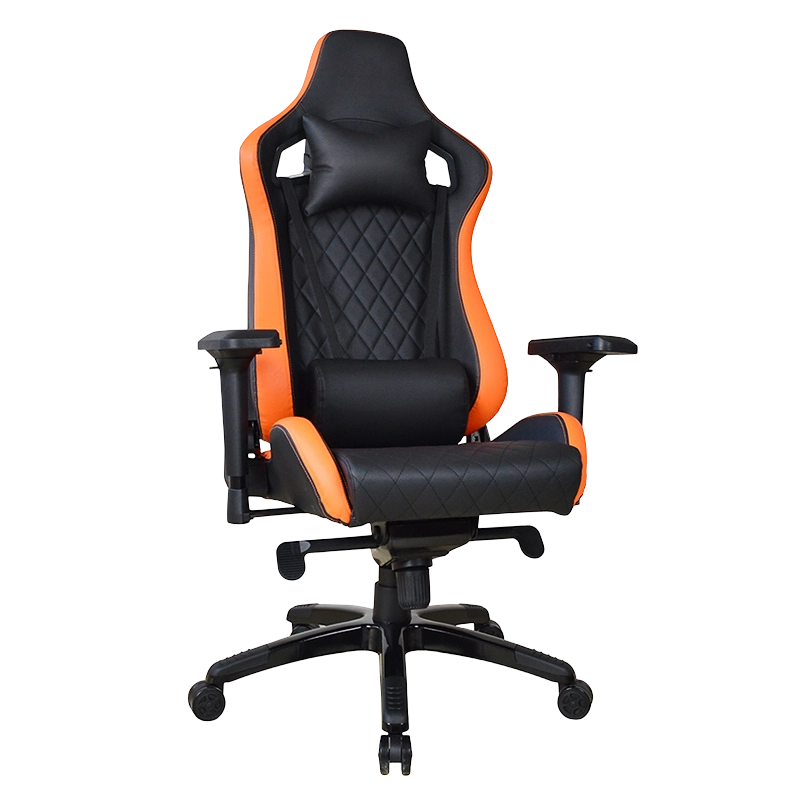 High-Back Racing Gaming Chair with 4D Armrests and Synchronized TiltThe synchronization mechanism moves the seat and backrest together for stable support, and a durable recline lock keeps the chair firm at chosen angles during intense use.View Product →
Rocking and recline functions add fun, but they also add stress to the mechanism. A durable chair can recline to roughly 135 degrees for breaks while the lock keeps the chair stable in the upright position. Avoid models where the whole mechanism feels loose when the lock is engaged.
Upholstery and Foam: Materials That Survive Daily Abuse
Low-priced gaming chairs often use thin PU leather that begins peeling at the edges within a year. For a teenager, consider mesh, fabric, or a sturdier PU leather with double-stitched seams.
| Material | Durability | Air flow | Cleaning | Best use |
|---|---|---|---|---|
| PU leather | Medium | Low | Easy wipe | Racing-style look |
| Mesh | High when reinforced | High | Vacuum | Long sitting hours |
| Fabric | High | Medium | Removable cover helps | Year-round comfort |
Foam is the other major durability factor. A seat cushion made of high-resilience foam keeps its shape under repeated load, while memory foam gives good pressure relief but must be dense enough to avoid bottoming out. Press the seat with your hand: if you can feel the hard seat pan through the cushion, the foam will fail quickly.
Also inspect the casters during the first check. PU casters roll quietly and do not scratch wood floors, but the wheel housing must be reinforced. Cheap nylon wheels wear unevenly and collect hair and dust, which makes the chair difficult to move.
Weight Ratings Are Not Optional
The published weight capacity of a gaming chair matters more for a teen than for an adult. Teenagers can gain 10 kg in a few months, and the load on the base and gas lift increases sharply when the user leans back or rocks. Choose a chair rated at least 20 kg above the teen's current weight, or buy to the heavier user if the chair will be shared.
A higher rating also means stronger materials. A base rated for 150 kg does not use the same thin nylon as one rated for 90 kg. Compare the rated capacity, the base material, and the gas lift class as one system rather than checking numbers in isolation.
- Signs that you need a heavy-duty configuration:
- The teen is tall for their age and still growing.
- The chair will be shared by siblings.
- The teen tends to lean far back while gaming.
Most base and caster failures happen when the dynamic load from leaning and rocking exceeds the static rated capacity of the chair.
A Five-Step Durability Check Before You Buy
Use this quick routine to judge any gaming chair before purchasing. The five steps take less than ten minutes.
- Confirm the weight rating with a safety margin above the teen's current weight.
- Check the gas lift class and ask whether the mechanism has been independently tested.
- Lock the recline angle and press the backrest firmly with both hands.
- Press the center of the seat to test foam density and overall support.
- Inspect the base spokes, caster housings, and the warranty scope for the mechanism.
- Measure the seat height and armrest range against the teen's leg length.
- Ask whether replacement casters and gas lifts are available later.
Finally, read the warranty text before ordering. A warranty that covers the gas lift and the tilt mechanism for at least two years is a much stronger sign of durability than a long warranty on the fabric alone.
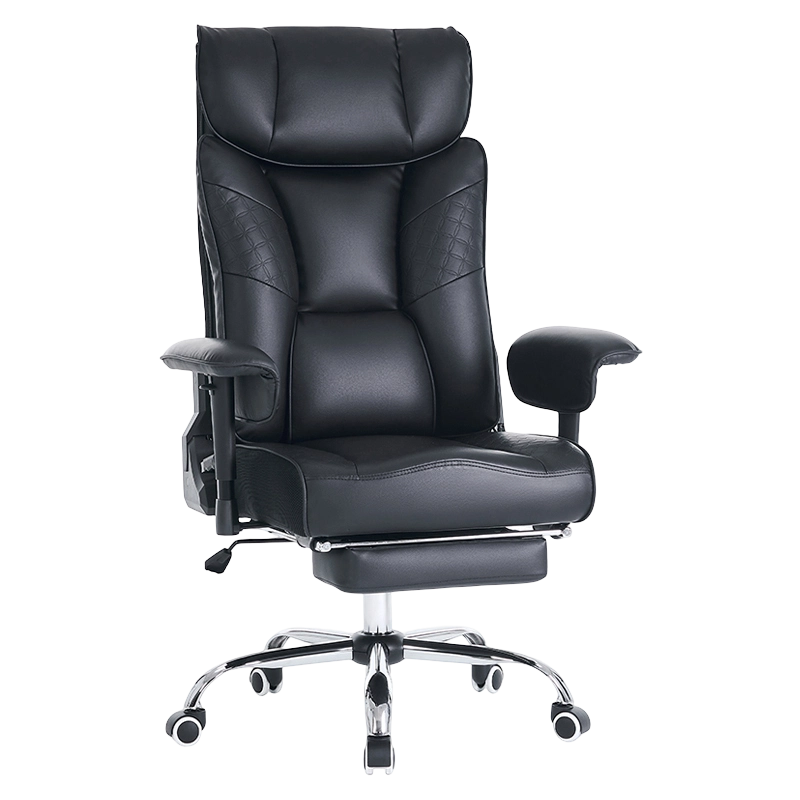
Sports-style chairs are worth considering for active teens because the bucket shape supports lateral movement during intense play, while a reinforced frame adds stability in daily use.
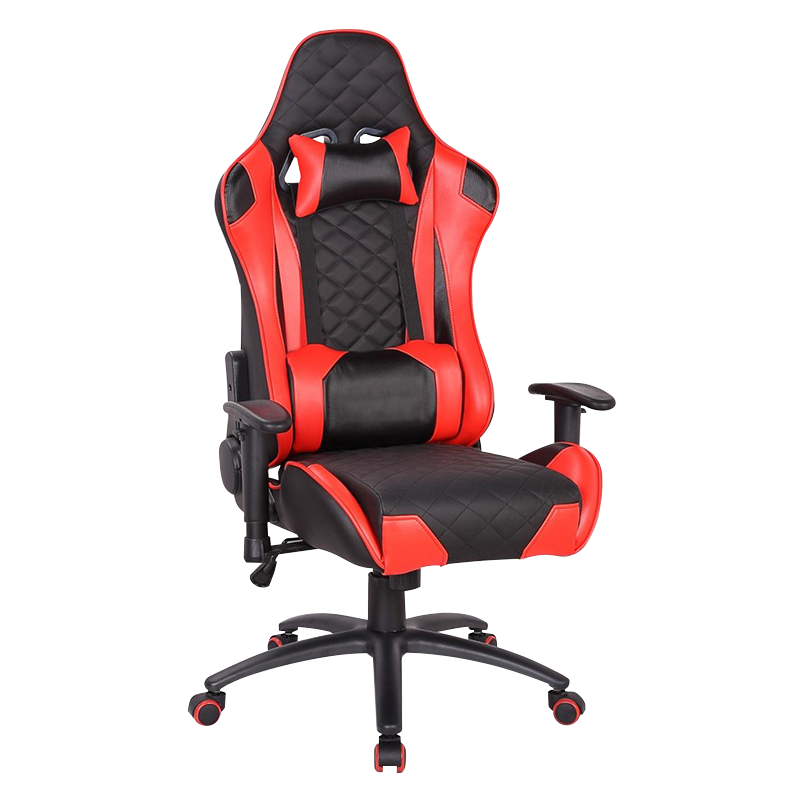 Swivel Racing Gaming Chair with 2D Armrests and Locking TiltA sports-style chair with a bucket shape supports lateral movement, while 2D armrests and a locking-tilt mechanism add comfort and stability for active daily gaming.View Product →
The Real Cost of Durability: Price per Year
Durability is easier to judge when you translate price into cost per year. A low-cost chair that needs replacement every 18 months costs more than a sturdier chair that serves for five years.
| Option | Typical price | Expected life | Cost per year |
|---|---|---|---|
| Basic gaming chair | 120 USD | 1.5 years | 80 USD |
| Durable gaming chair | 260 USD | 5 years | 52 USD |
| Premium gaming chair | 400 USD | 7 years | 57 USD |
The durable mid-range chair delivers the lowest annual cost in this example. You also avoid the hidden costs of a failed chair: a dropped gas lift, scratched floors, and the time spent researching a replacement.
5 years
Realistic service life for a well-built teen gaming chair
2 times
Lower annual cost compared with a chair that lasts 18 months
Simple maintenance extends the service life of any chair. Wipe the upholstery, tighten loose screws every few months, and lubricate the moving joints according to the manufacturer's instructions. A durable chair is not maintenance-free; it is simply built so that maintenance actually keeps it working.
Frequently Asked Questions
Q1: What is the best material for a durable gaming chair for teens?
There is no single best material. Breathable mesh resists peeling and keeps the back cool during long sessions, while double-stitched PU leather is easier to clean and gives a classic gaming look. Fabric offers good comfort but may stain more easily. Choose by climate, cleaning habits, and the teen's preference.
Q2: Should I buy a children's chair or an adult chair for a 13-year-old?
It depends on height. If the teen's knees stay close to the seat edge and the seat height range covers the correct floor-to-seat measurement, an adult chair can work. For shorter teens, a junior chair with adjustable lumbar support and a footrest prevents leg dangling and keeps the spine healthier.
Q3: How much should a durable gaming chair for teens cost?
In most markets, a genuinely durable chair starts around 200 to 300 USD. Below this range, the gas lift, base, and foam are usually the first compromises. Higher prices are justified only when the mechanism, adjustability, and warranty are also better.
Q4: How can I tell whether the gas lift and base are strong enough?
Look for a gas lift with a clear class rating and a base material that matches the user's weight range. The chair should keep its height when the user sits and leans back. If the lift sinks slowly even when new, the chair is already failing. The rated capacity and the warranty length on the mechanism are reliable indicators.
Q5: Is mesh more durable than leather-look upholstery for gaming chairs?
Mesh usually resists cracking and peeling better than thin PU leather, especially in warm or humid climates. However, the mesh frame and the tension bands underneath must be inspected because a poorly built mesh seat can sag. Reinforced mesh with a dense weave is a solid choice for a teen who sits for hours.
A durable gaming chair for teens is an investment in posture, safety, and household peace. Match the frame, mechanism, and materials to how the teen actually sits, and the chair will still be comfortable when homework replaces gaming. For a broader comparison, read the detailed industry guide on choosing a gaming chair.



-
EMAIL
jacky@guyoufurniture.com
-
mobile
+86-15705723262
-
address
Baishuiwan Industry Zone, Tianhuangping Town, Anji County, Huzhou City, Zhejiang Province, China
CONTACT FORM
Copyright 2024 Anji Guyou Furniture Co., Ltd. Rights Reserved. Wholesale Furniture Chairs Suppliers
