

 Language
 English
 Français
 Español
 Deutsch
Best Gaming Chair for a Teenage Boy: The 2026 Buying Guide for Parents
2026-10-09
Choosing a gaming chair for a teenage boy is not the same task as picking one for an adult. A boy aged 13 to 17 often falls into a difficult sizing gap: standard gaming chairs are too large, while children's chairs feel too small. His height, weight, and sitting habits change rapidly, and the chair you buy today may need to serve him for several years.
This guide examines the essential criteria for selecting the best gaming chair for a teenage boy. Instead of offering generic recommendations, we break down each feature category with practical considerations, from seat dimensions and lumbar mechanics to material durability and long-term value. You will leave with a clear picture of what matters most, what to measure, and where to focus your budget.
Why a Teenage Boy Needs a Dedicated Gaming Chair
A standard dining chair or an adult office chair cannot deliver the same level of adjustability and support that a purpose-built gaming chair provides. For a teenage boy, the right chair does more than look stylish; it protects his spine, his concentration, and his physical comfort.
Consider what happens when a boy sits on a chair that is too large. His feet dangle instead of resting flat on the floor, which places pressure behind the knees and tilts his pelvis backward. His lower back loses its natural curve and encourages slouching. His arms reach upward to use a keyboard or mouse, lifting his shoulders and straining his neck. Over time, these patterns contribute to fatigue and poor posture habits.
A gaming chair designed for a teenage boy addresses these problems through targeted design features:
- Seat height adjustment accommodating body heights from 150 cm to 180 cm
- A seat depth between 44 cm and 50 cm, suited to most teenagers without pressing against the back of the knees
- Lumbar support that can be repositioned vertically to match the lower back curve
- Backrest proportions that keep the shoulders free and natural
- Armrests that adjust vertically and horizontally to adapt as the body grows
Ergonomic research on adolescent workstation use shows that sitting height and shoulder breadth change noticeably between ages 14 and 18. A fixed, one-size-fits-all chair can become uncomfortable within a single school year. Adjustability is not a luxury in this age group; it is a fundamental requirement. When you begin comparing models, the gaming chair selection criteria in our buying guide can help you sort through the options.
Key Features to Evaluate Before Buying
The features below determine whether a chair meets his needs today and whether it continues to fit as he grows. Review each one carefully.
Seat Size and Weight Capacity
The seat is the foundation of the chair. A teenage boy's hip width typically measures between 32 cm and 40 cm depending on age and build. Look for a seat width of at least 48 cm to leave a comfortable margin. Seat depth matters even more: when he sits with his back against the backrest, there should be a gap of about 3 cm to 5 cm between the edge of the seat and the back of his knees. If the seat is too deep, his feet will not rest properly on the floor and he will compensate by slouching forward.
Weight capacity is the next number to verify. Most gaming chairs support between 100 kg and 150 kg. For a teenage boy whose weight will likely increase over the next few years, a chair rated for at least 120 kg offers a practical buffer. This rating also signals that the gas lift cylinder, star base, and casters are built with stronger components.
Lumbar and Neck Support
The lumbar spine curves inward in its natural state. Prolonged sitting without support can flatten that curve and strain the discs in the lower back. A well-designed gaming chair includes a lumbar pillow or a built-in lumbar mechanism that applies gentle forward pressure to the lower back when the boy sits upright.
For neck support, the headrest must sit behind the cervical spine rather than pushing the head forward. The recommended headrest height for a teenage boy is roughly 55 cm to 65 cm above the seat surface. Adjustable headrests that slide vertically are particularly useful because the torso grows quickly in the teen years.
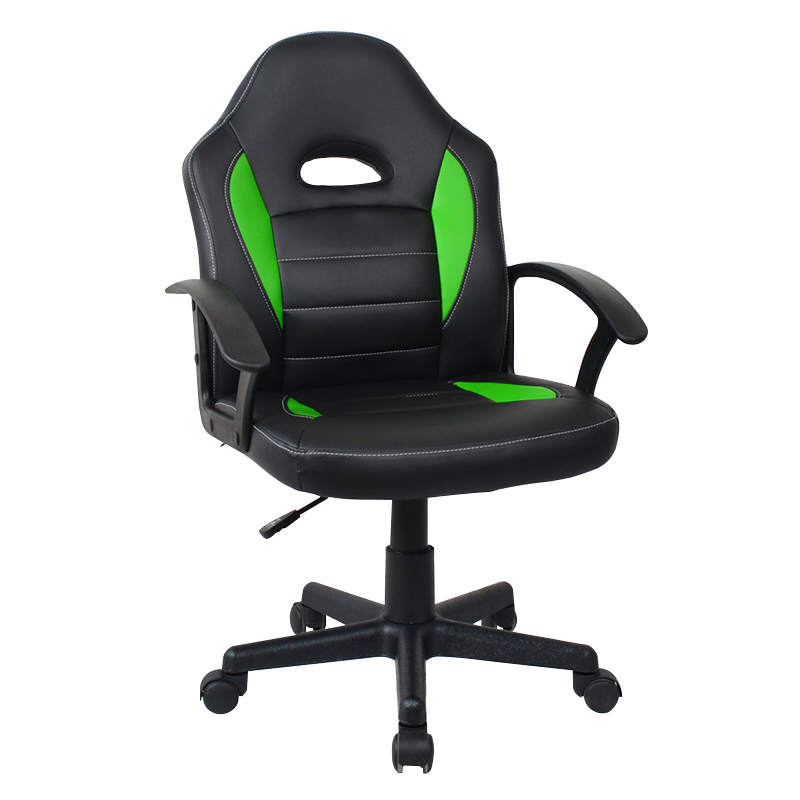 Mid-Back Swivel PP Armrest Kid Gamer Chair Y-2625This mid-back gaming chair with fixed PP armrests offers adjustable height and a swivel base, making it a practical fit for a teenage boy needing stable arm support during long gaming or study sessions.View Product →
Armrest Adjustability
Armrests are often the most overlooked component, but they determine whether the boy develops shoulder and neck tension during long sessions. His forearms should rest comfortably on the armrests with elbows at roughly 90 degrees and shoulders fully relaxed.
At minimum, choose a chair with 2D armrests, meaning they adjust in height and horizontal position. Four-dimensional armrests also pivot and slide, providing extra flexibility for different tasks. For a teenage boy, 2D armrests are a reasonable baseline; they let him match the armrest height to his desk so that he does not have to hunch upward while gaming or typing. A sports-oriented model with 2D armrests strikes a practical balance between function and cost.
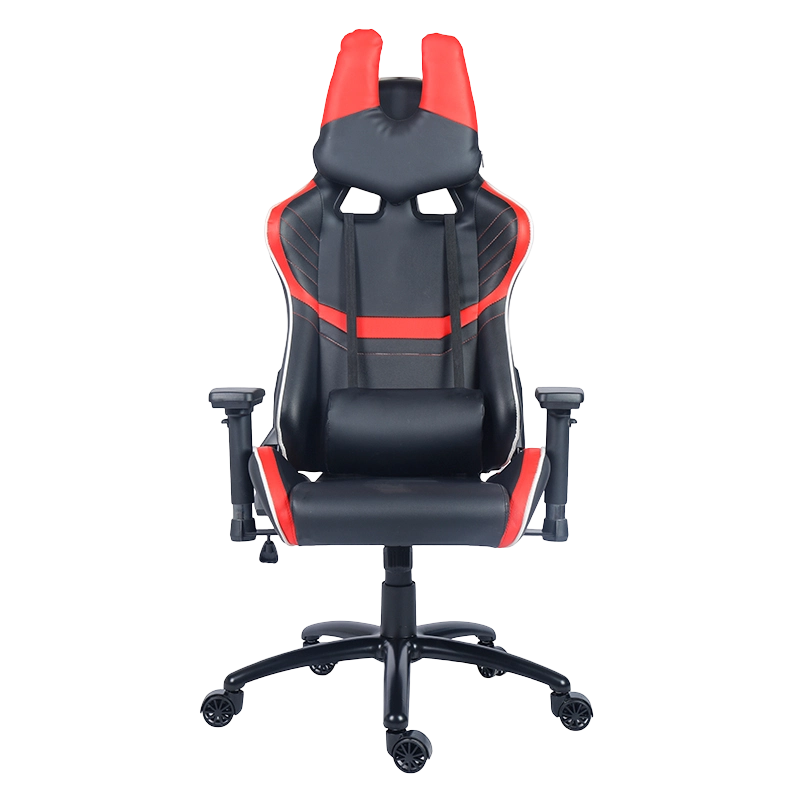 2D Armrest Adjustable Lift Racing Gaming Chair Y-2511With height-adjustable 2D armrests and a lift mechanism, this racing-style chair helps a young user align armrests to desk height, reducing shoulder strain while gaming or typing.View Product →
Recline and Tilt Mechanisms
Most gaming chairs offer a recline function from 90 degrees to 135 degrees, with some reaching 170 degrees. For a teenage boy, a range of 90 degrees to 135 degrees is sufficient for both focused gameplay and short relaxation breaks. The recline mechanism should lock firmly in several positions, because a backrest that flexes under load reduces control during intense moments. A rocking function can be a helpful addition for relieving sitting fatigue during study sessions.
Upholstery and Materials
Teenagers are rarely gentle with furniture. The chair surface must resist spills, scratches, and daily friction. Each material has its pros and cons.
- PU leather wipes clean easily and looks bold, but can feel hot during summer sessions
- Breathable mesh gaming chair options keep the back cool and work well for long marathons
- Fabric is soft and comfortable but absorbs stains more readily
- Hybrid constructions combine mesh backrests with PU leather seats for balanced airflow and easier cleaning
Cushion foam density is just as important as the outer surface. Low-density foam compresses quickly and loses shape within months. High-resilience foam with a density above 40 kg per cubic meter maintains its support and shape for years of daily use.
Types of Gaming Chairs for Teenage Boys
Not every gaming chair serves the same purpose. The table below compares the main types you will encounter and matches them to different teenage needs.
| Type | Ideal Use Case | Key Features | Main Trade-off |
|---|---|---|---|
| Racing style | Boys who want an aggressive gamer aesthetic | High backrest, bucket seat, 2D to 4D armrests | Seat depth can be too long for shorter teens |
| Mesh gaming | Warm rooms and long play sessions | Breathable mesh back, cooling gel seat | Less visually striking than PU leather |
| Floor gaming | Console play and small bedrooms | Low profile, foldable, easy storage | Minimal lumbar adjustment |
| Kids or junior | Boys under 150 cm tall | Compact proportions, smaller seat depth | May be outgrown in two to three years |
| Gaming office hybrid | Gaming plus homework or streaming | Neutral design, ergonomic controls | Lacks the flashy racing look |
Many teenage users prefer seats that combine comfort with personality, especially one that fits a bedroom that doubles as a study space. A flip-armrest gaming office chair is a practical example of this dual-purpose approach, because the arms can be raised out of the way when the boy needs to pull himself close to the desk for homework.
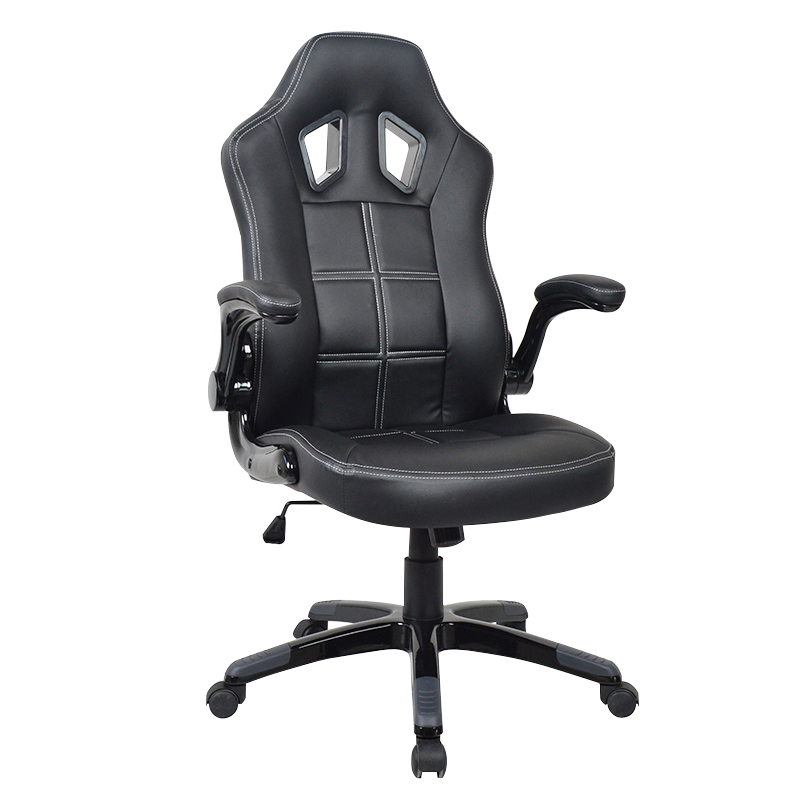 Flip Armrest Swivel Racing Game Chair Y-2591This racing-style chair features flip-up armrests and 360-degree swivel, allowing a teenage user to move freely and pull close to a desk, while high-density foam supports neutral posture for spinal health.View Product →
Ergonomic Considerations for Growing Bodies
The teenage years are a critical window for spinal development. Research in pediatric ergonomics indicates that poor seated posture during adolescence is associated with a higher incidence of back pain in young adulthood. A chair that promotes neutral posture is therefore more than a comfort upgrade; it is a long-term health investment.
Neutral posture means that when the boy sits, an imaginary vertical line runs through his ear, shoulder, and hip. His feet rest flat on the floor, his knees bend at about 90 degrees, and the natural inward curve of the lumbar spine stays intact. His wrists remain straight over the keyboard or controller, and his elbows stay close to his body.
The diagram above shows the key posture checkpoints. When comparing chairs, keep these measurements in mind. A chair that forces any of these joints out of alignment will create strain even if its other features look impressive on paper.
One additional point: teenage boys often stay seated for hours without taking breaks. Choose a chair with a smooth-rolling caster system and a swivel base that lets him reach items without twisting his spine. A five-star base with a painted metal or nylon construction is a solid sign of stability, especially for boys who shift their weight frequently during intense gameplay.
Budget Considerations: Where to Invest
Gaming chair prices vary dramatically. For a teenage boy, the objective is to cover all ergonomic essentials without paying for brand prestige, RGB lighting, or exotic materials that he will rarely use.
A practical pricing breakdown looks like this:
| Price Range | What You Get | Best For |
|---|---|---|
| Entry under 100 | Basic height adjustment, fixed armrests, low-density foam | Occasional use on a tight budget |
| Mid 100 to 180 | 2D armrests, lumbar pillow, denser foam, solid base | Most teenage boys with daily sessions |
| Premium 180 to 300 | 4D armrests, synchronized tilt, advanced lumbar support | Boys who play or study six-plus hours daily |
| High end above 300 | Premium materials, custom finishes, brand name | Hard to justify for a growing teenager |
The most economical approach is calculating cost per year. A 150-dollar chair that serves three full years costs 50 dollars per year. A 280-dollar premium chair that lasts five years costs roughly the same per year while delivering more consistent comfort. A 70-dollar chair that wears out in one year is the worst value, because you will repurchase sooner and he will sit on degrading foam in the meantime.
Also keep resale value in mind. Well-maintained mid-range gaming chairs hold their value reasonably well on the second-hand market. If your son outgrows the chair before the mechanism wears out, you can recover part of the original cost.
Care and Maintenance Tips
A gaming chair in a teenage boy's room will face soda spills, snack crumbs, dust, and daily wear. Simple habits can significantly extend its life:
- Wipe down the seat and backrest weekly with a damp soft cloth
- Remove dust and hair from the casters every month to keep rolling smooth
- Treat PU leather surfaces with a mild cleaner every two months
- Tighten loose bolts and screws as soon as rocking or wobbling appears
- Check the gas lift cylinder for smooth height adjustment and replace it if it drops under load
Avoid harsh cleaning chemicals, which can crack PU leather and weaken fabric fibers. On mesh chairs, use a soft brush instead of a vacuum cleaner to avoid damaging the weave. For stains, blot the area immediately with a damp cloth and mild soap rather than rubbing it in.
If the chair has a recline lever or tilt tension knob, operate it with moderate force. Yanking on these mechanisms repeatedly can wear out the internal pawl and stop the backrest from locking. Teach your teenage boy to adjust his chair gently, just as he would with a bicycle saddle or a car seat.
Frequently Asked Questions
Q1: What size gaming chair is best for a teenage boy?
Look for a seat height range of 42 cm to 52 cm, a seat depth between 44 cm and 50 cm, and a weight capacity of at least 120 kg. The backrest should not push his shoulders forward when he sits against it. Measure his lower leg length from the floor to the back of the knee to confirm the minimum seat height setting works for him.
Q2: Are expensive gaming chairs worth it for teenagers?
Mid-range chairs between 100 and 180 dollars usually provide the best value. They include essential adjustments such as 2D armrests, a lumbar support cushion, and durable foam. Going above 300 dollars adds premium branding and luxury materials that do not bring meaningful ergonomic improvements for a growing teenager.
Q3: How long will a gaming chair last for a teenage boy?
With regular maintenance, a well-built chair can last three to five years of daily use. The most critical factors are high-resilience foam and a solid five-star base. If the gas lift loses height memory or the foam becomes visibly compressed, replace it before posture problems develop.
Q4: Is mesh or PU leather better for a gaming chair?
It depends on the room climate and his habits. PU leather is easy to wipe clean and has a sporty look, but it traps heat. Mesh is breathable and comfortable for long hours, though it is harder to wipe down. Many chairs solve this by using a mesh backrest and a PU leather seat, balancing airflow with easy cleaning.
Q5: At what age should a boy switch from a kids gaming chair to an adult one?
Most teenagers are ready for a full-size chair once they reach roughly 150 cm to 155 cm in height. At that point, the seat depth of a kids chair becomes too short, and the backrest no longer provides adequate lumbar coverage. Switch to an adult model when his knees extend beyond the edge of the kids chair seat.




-
EMAIL
jacky@guyoufurniture.com
-
mobile
+86-15705723262
-
address
Baishuiwan Industry Zone, Tianhuangping Town, Anji County, Huzhou City, Zhejiang Province, China
CONTACT FORM
Copyright 2024 Anji Guyou Furniture Co., Ltd. Rights Reserved. Wholesale Furniture Chairs Suppliers
